Tsukuba Tech is (as far as I am aware) the only university in the world to focus on Deaf and blind students (the closest similar option being Gallaudet, in the US, which focuses on Deaf students). I reached out to ask if I could visit, hoping to learn more about their history, offerings and opportunities for collaboration. The university is divided into two campuses. Prof. Makato Kobayashi, who teaches computer science in the blind campus was kind enough to host me for my visit, and Prof. Keiichi Yasu introduced me to the Deaf campus.
From its architecture (many windows around a courtyard in the Deaf side of campus) to its interior design (round tables; hallways lined with wooden strips that include tactile information about offices across the way) Tsukuba Tech was thoughtfully designed for its student body.

Meanwhile its faculty are deeply engaged in the mission of supporting their students. Classrooms are clearly designed with accessibility in mind, but the work does not stop there. Makato and his peers demonstrated custom software for student learning, such as better CART support for Japanese transcription (captiOnline) by Prof. Daisuke Wakatsuki; and a tactile system for listening to letters in the international phonetic alphabet chart by Prof. Kobayashi.

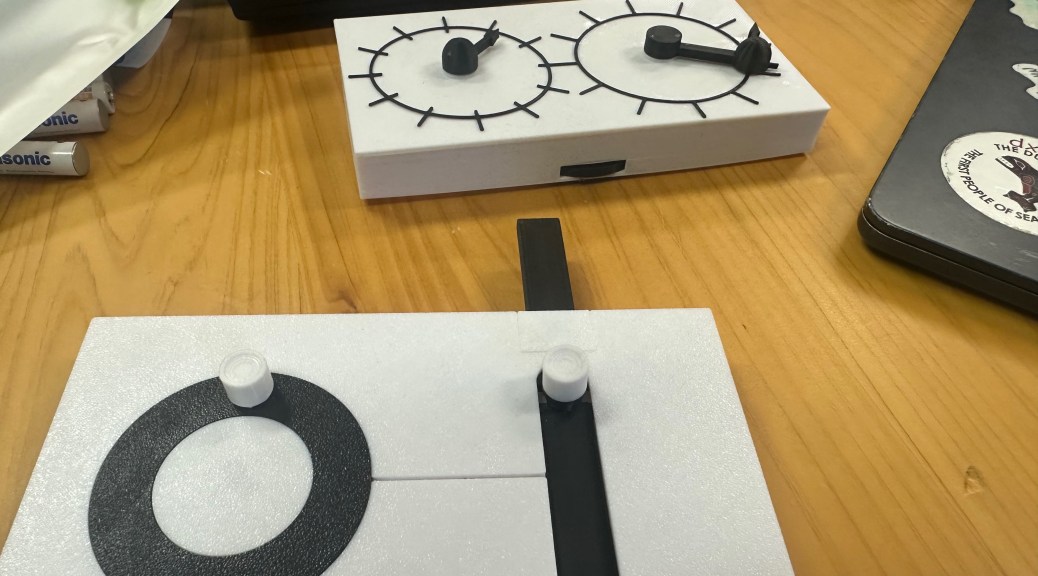
The faculty also care about student life. Prof. Kobayashi showed me an adapted dart games, and a tactile system for demonstrating arm motion when throwing a ball, among other demos (see his publications for more)
Of course there are tradeoffs in providing such uniquely designed spaces versus supporting disabled students in mainstream spaces. For example, Tsukuba Tech has a limited number of majors — the blind campus includes acupuncture (a domain in which blind people are traditionally highly valued as practitioners in Japan), physical therapy, computer science (including information science and accessibility) and disability studies. The Deaf campus includes mechanical engineering, computer science (same subspecialties), industrial technology (i.e. synthetic design), architecture, and disability studies. DeafBlind students can study in either campus.
I have long thought that we need more spaces designed from the ground up to be accessible to Deaf, blind, DeafBlind and students with a variety of disabilities. I believe there are ways to address such tradeoffs, such as affiliating with a nearby mainstream institution, which can allow students to move back and forth more fluidly, and support the recruitment of faculty who benefit from the same fluidity. Learning about what already exists is an important step to imagining what could come next.