Shuxu “Sev” Huffman

Shuxu “Sev” Huffman (they/them) is a PhD student at Gallaudet University and Université Paris-Saclay, where they are affiliated with the Laboratoire Interdisciplinaire des Sciences du Numérique (LISN). They are advised by Dr. Raja Kushalnagar at Gallaudet University and Dr. Patrick Bourdot and Dr. Tifanie Bouchara at Université Paris-Saclay. They earned both their bachelor’s and master’s degrees from the University of Washington and have maintained a long-term research collaboration with the Make4all Lab and Dr. Jennifer Mankoff.

Sev studies Deaf technology and the role technology can play in Deaf people’s lives. Their work examines how technologies can be designed and positioned to support Deaf people without treating technology simply as a way to remediate hearing loss or communication difference. Their research spans areas including sign language AI, sport technologies for disabled athletes, and immersive learning environments, with a broader interest in how technology can fit into Deaf ways of communicating, learning, interacting, and moving through the world.

Ella Williams

Ella Williams (she/her) is a PhD student in the Paul G. Allen School of Computer Science and Engineering at the University of Washington. She is advised by Dr. Jennifer Mankoff. She completed her undergraduate studies at Macalester College in St. Paul, MN, where she double-majored in Computer Science and Geography, with a minor in Critical Theory.

Ella’s research interests lie in accessible making, with an emphasis on making computer-aided design (CAD) accessible to enable all to pursue a higher-education in engineering.

Gyeongdeok Kim

Gyeongdeok Kim is a Ph.D. candidate at the Gwangju Institute of Science and Technology (GIST) in South Korea, advised by Professor Gunhyuk Park. He is currently visiting the Make4All group at the University of Washington, working with Professor Jennifer Mankoff. His research interests include human-computer interaction, accessibility, and haptics, with a focus on assistive technologies for blind and low-vision people.

His work includes I-Scratch, a system for creating presentation slides through tactile and auditory interaction with AI assistance, and I-VAMOS, a system for independent and private voting with paper ballots. He is currently studying the training practices and experiences of goalball players and coaches, including individual practice, feedback, and team coordination.

Personal website

“I Don’t Trust it, but I Use it”: Navigating Trust, Privacy, and Identity in Disabled People’s Use of Generative AI

Jazette Johnson, Aaleyah Lewis, Jennifer Mankoff, and Olivia Banner. 2026. “I Don’t Trust it, but I Use it”: Navigating Trust, Privacy, and Identity in Disabled People’s Use of Generative AI. In Proceedings of the 2026 CHI Conference on Human Factors in Computing Systems (CHI ’26), April 13–17

As generative AI (GenAI) is integrated into everyday technologies, it offers new accessibility opportunities and risks for disabled people. However, little is known about how disabled people navigate GenAI in their everyday lives, particularly how trust, privacy, and intersectional identities affect these experiences. We present findings from seven cross-disability focus groups (N=20) that explore how disabled people navigate GenAI. Our findings reveal that while GenAI supports autonomy, efficiency, and communication, it also introduces accessibility taxes and ethical dilemmas. Although participants voiced skepticism, many continued using GenAI out of necessity. Finally, we found identity-based benefits and tensions, in which GenAI preserved and validated intersecting identities, but also misrepresented and erased those identities. We frame these negotiations as a constant balancing act between access and risk, urging research to further examine how “access” is conceptualized. We offer implications for creating GenAI tools that are transparent, trustworthy, and responsive to intersectional identities.

Aaleyah Lewis

Aaleyah is a PhD student in the Paul G. Allen School of Computer Science and Engineering at the University of Washington. She is advised by Dr. James Fogarty and Dr. Jennifer Mankoff. She completed her undergraduate studies at UMBC, where she majored in Computer Science. She is a GEM fellow and ARCS Foundation Scholar.

Her research in accessibility explores the opportunities and tensions in improving AI-based technologies to equitably support people with disabilities who hold intersecting marginalized identities. She is also interested in communication access for multilingual people with disabilities who have diverse communication patterns. You can find Aaleyah’s work at: https://aaleyahlewis.github.io/.

Carlos Tejada

Carlos Tejada is a Research Scientist at the Center for Research and Education on Accessible Technology and Experiences (CREATE) at the University of Washington, where he investigates how to make computer-aided design (CAD) software more accessible to blind and low-vision users. His research sits at the intersection of Human-Computer Interaction (HCI), accessibility, and digital fabrication, with a focus on reimagining traditional design tools to support inclusive making and broaden participation in fabrication technologies.

Carlos holds a PhD in Computer Science from the University of Copenhagen, where his dissertation introduced Print-and-Play Fabrication—a new fabrication paradigm for creating fully interactive 3D-printed objects that are ready to use immediately after printing. These objects sense, process, and respond to user interaction using only air-based mechanisms, without requiring electronics, assembly, or calibration. His work opens up new possibilities for accessible, low-barrier fabrication in education, prototyping, and beyond.

Personal website

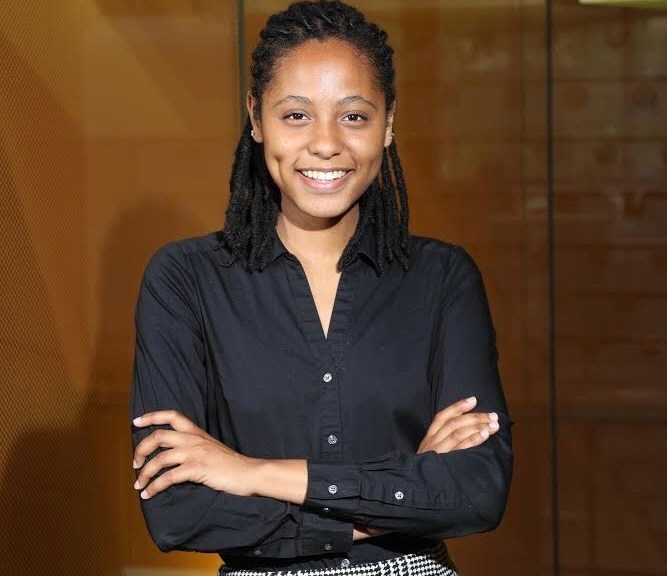
Jazette Johnson, Ph.D.

Jazette Johnson is a Postdoctoral Scholar at the University of Washington’s CREATE (Center for Research and Education on Accessible Technology and Experiences) working with Jen Mankoff. Her research sits at the intersection of Human-Computer Interaction (HCI), accessibility, and health equity. She partners with disabled and historically marginalized communities to explore how technology, particularly generative AI and online platforms, can support inclusive health communication, build trust, and amplify community voice. Jazette’s work is deeply community-engaged, centering co-design, lived experience, and culturally responsive methods to inform the development of accessible, real-world solutions.

Visit Jazette’s homepage at: www.Jazettejohnson.com

Grace Zhou

Grace is a third-year computer engineering and applied math student at the University of Washington. They are interested in applications of CS towards accessibility, fabrication, and artistic practices. In their free time, they enjoy reading about art history, going to the gym, and painting.

Currently, in the Make4All lab, they are excited to be working on the multi-axis 3D printing project!

Xiaoyi Wang

Xiaoyi Wang is a third-year undergraduate studying Computer Science and Mathematics. She is passionate about Robotics, 3D printing, full-stack development, and mathematical modeling.

Sanjana Satagopan

Sanjana Satagopan is a first-year student in computer science at the University of Washington. She has experience programming for various startups, including game development, AI, and full-stack dev. She is excited to learn more about sensors, robotics, and more, and is excited to be finding ways to use technology for accessibility research.

On the side she’s interested in environmentalism and loves tennis and music!

Visit Sanjana’s website here: https://www.linkedin.com/in/sanjanasatagopan/